Michalina Wisłocka
1921 - 2005
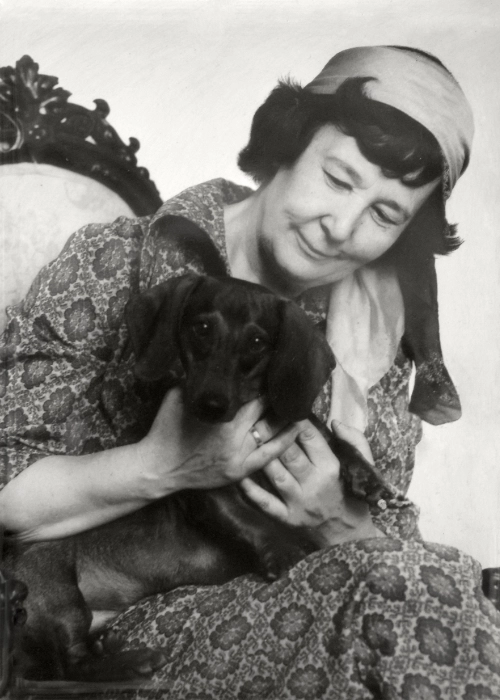
“There is one thing that a man should never forget about […] the decision to terminate the pregnancy should always be left for the wife to decide. She is the one carrying the pregnancy, she devotes the larger part of her life to raise the child, and this is also her health and her physical suffering that is at stake.”
O jednej rzeczy nigdy nie wolno zapominać mężczyźnie (inaczej niż przy ciążach planowanych), że decyzję o przerwaniu ciąży należy zawsze zostawić żonie. Ona ciążę nosi, ona większą część życia poświęca wychowaniu dziecka, a także o jej zdrowie i cierpienie fizyczne chodzi.
Quoted from M. Wisłocka, Sztuka kochania, Warszawa 1978
Biography
Michalina Wisłocka (1 July 1921, Łódź, Poland – 5 February 2005, Warsaw, Poland) was a gynecologist and sexologist and author of bestselling sexual advice books. She was one of the co-founders and active members of the Towarzystwo Świadomego Macierzyństwa (TSM) , or Society for Conscious Motherhood. In her counselling and publications she stressed the importance of female sexual satisfaction, breaking taboos surrounding both contraception and the discussion of the practical aspects of sexual life.
Social background and private life
Born Michalina Anna Braun in 1921, she was the daughter of Jan and Anna Braun (née Żylińska). Her father earned his living as a schoolteacher and headmaster. Her mother also worked as a teacher, as well as taking care of their three children – including Michalina’s younger brothers Andrzej and Jan. As a teenager, Michalina fell in love with an older family friend, Stanisław Wuttke, and in July 1938 they were married in a private ceremony. Initially kept secret from their families due to Michalina’s young age, the marriage was officially confirmed in September 1939.
As a result of the ethnic expulsions of the Polish population of Łódź, her family was forced to leave their home when the city was annexed by the Third Reich into the administrative district of Reichsgau Wartheland. The young couple first stayed in Kraków with Michalina’s family and later moved to Warsaw to stay with her husband’s mother. In Warsaw, her husband taught in underground schooling, and they were both employed at the Institute of Hygiene taking part in typhoid research as lice-feeders. As a result of this work, Michalina became seriously ill with typhoid, which had adverse consequences on her health for the rest of her life.
During the time they spent in German-occupied Warsaw, the couple was joined by Michalina’s childhood friend Wanda, who soon became intimately involved with Stanisław, with the consent of his wife. The three continued to live in a love triangle until 1955, when Stanisław and Michalina divorced. In 1947 Michalina gave birth to a daughter, Krystyna; at roughly the same time, Wanda gave birth to a son, Krzysztof. For the first years of their lives, to avoid social scrutiny, the two offspring were introduced as twins and both registered as children of Michalina and Stanisław. In 1946, Stanisław Wuttke changed the family surname to a less German-sounding Wisłocki.
Education and professional path
In 1945, the couple and Wanda returned to Łódź, where Michalina resumed and completed her high school education. She then enrolled as a student at the Faculty of Medicine at the University of Łódź. In 1946, they moved back to Warsaw, and she continued her medical studies at Warsaw Medical University. After graduating in 1952, Wisłocka embarked on specialist training in gynecology and obstetrics, which she finished in 1959. In 1962, she completed a course in sexology at the Medical University in Gdańsk under the supervision of the psychiatrist Professor Andrzej Bilikiewicz. In 1964, she began her doctoral studies in Warsaw, but did not finish her Ph.D due to the death of her supervisor, Professor Tadeusz Bulski in 1966. In 1969, she defended her Ph.D at the Medical University in Wrocław with a thesis exploring the methods of cythormonal diagnostics among infertile women. Her academic career and professional activities were at times limited by serious health problems, in particular inflammatory cardiomyopathy which she developed due to typhoid infection during the war. After Wisłocka retired in 1976, she focused on public sex education activities.
Expert work and activism
In 1957, Wisłocka co-founded the Society for Concious Motherhood (TSM). Drawing on interwar traditions, the organisation campaigned for improved access to family planning education, provided medical counseling, and distributed contraceptives. As part of her work for TSM, Wisłocka maintained an active media presence in women’s magazines and published a number of advice books on contraception, sexual disorders, and married life. She also regularly treated patients at the TSM clinics and at the Hygiene and Upbringing Counselling Centre in Warsaw. Between 1970 and 1976, Wisłocka was the director of the Cytological Clinic run by the TSM (at that time known as the Society for Family Development).
Wisłocka started working on her magnum opus, Sztuka kochania (The Art of Loving), in the early 1960s, inspired by conversations with her female gynaecological patients, as well as by her own sexual experiences and the romantic relationships which followed her divorce. Despite her work at the TSM, Wisłocka tended to work independently. She published only as a single author and rarely entered into cooperation with other doctors and educators. Sometimes, she antagonised many people with her direct and frank communication style. In the early 1970s, when her book was still in the editorial pipeline, she received highly critical reviews from fellow sexologists Kazimierz Imieliński and Mikołaj Kozakiewicz, who took issue with the manuscript for its unscientific language and graphic descriptions of sexual positions. In her later interviews, Wisłocka remembered that it was this criticism from the peer reviews, rather than simply moral objections from the Censorship Office and the Party, that halted the publication of the book.
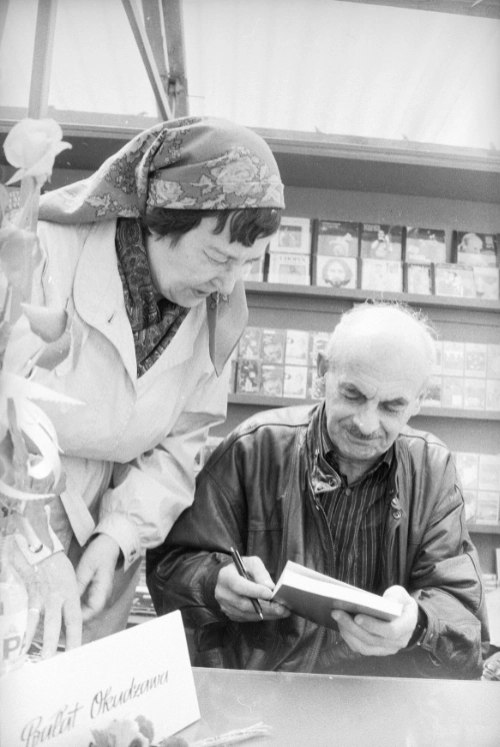 When Sztuka kochania was finally published in 1978, it became an instant bestseller. Allegedly sold in millions of copies, it was the most popular sex advice book in state-socialist Poland, circulating in both official editions and grassroots reproductions. It was also translated into a number of other languages, including English (A Practical Guide to Marital Bliss, 1987), Czech (Umenie milovat’, 1990), Russian (Iskusstvo lûbvi, 1990), and Romanian (Arta iubirii și educația sexuală, 1994).
Research and activism with an emphasis on feminist knowledge
In the mid-1950s, following the breakup of her marriage, Wisłocka began exploring her sexuality and entered a number of romantic relations with men. These relationships allowed her to discover how her own body experienced sexual pleasure and in turn shaped the advice on sexual satisfaction she developed for her patients and readers. Similarly to other socialist sexologists at that time, she emphasised the role of social and economic context in affecting women’s sexual pleasure. “An overtired and sleep-deprived woman will never be a good partner in physical love,” she underscored in Sztuka kochania, pointing out the detrimental impact the double burden of domestic and professional work had on women’s sexual lives. In contrast to her contemporaries, Wisłocka did not stop at analysing social dimensions of sexuality, but went on to provide highly technical advice on achieving sexual pleasure. Taking into account women’s anatomy, she encouraged adopting sexual positions most conducive to women’s orgasms.
Wisłocka was a keen advocate of contraception, portraying it as the crucial component of satisfying sex life, allowing women to fully concentrate on their pleasure and not on the fear of an unwanted pregnancy. She was however sceptical of hormonal contraceptive methods, advocating instead the use of barrier methods such as condoms and cervical caps, as well as spermicides. Despite having herself undergone a number of abortions, she openly criticised the method, defining it as ‘the worst solution’, mostly because of health risks associated with the procedure.
For all its revolutionary character, Wisłocka’s sexual advice was still deeply rooted in gendered understandings of sexual desire. Her advice was shaped by a binary understanding of gender roles, and she viewed women’s performances of traditional feminity as important factors in shaping a couple’s harmonious sex life. Her understanding of sexual desire was profoundly essentialist, portrayed as the ‘natural order of things.’ This, in turn, affected her views on sexual violence. In Sztuka Kochania, Wisłocka portrayed rape victims as partially responsible for provoking male desires through their ‘recklessness’ and a tendency to lead men astray with their behaviour. This expert advice also permeated into the courtrooms, affecting the ways in which rape victims were treated by the justice system in state-socialist Poland.
Legacy and impact
In 2017, a film based on Michalina Wisłocka’s biography (Sztuka kochania. Historia Michaliny Wisłockiej, dir. M. Sadowska) became a blockbuster in Polish cinemas. In the film, Wisłocka was portrayed as the sole heroine behind the Polish sexual revolution. In commemoration of her contribution to Polish sexology, a re-edition of Sztuka Kochania was published, accompanied by contemporary sexological commentary. “She challenged taboos, questioned authority, but most importantly helped her patients, inspiring people to discover their desires,” emphasised the publishers on their website. While the legacy of Wisłocka in the field of Polish sexology is complex, her impact on public discussion of sexuality in Poland has certainly been long-lasting.
Anna Dobrowolska
Selected Works
Wisłocka, M., Technika zapobiegania ciąży: poradnik dla lekarzy, [Techniques of Pregnancy Prevention: A Guide for Physicians], (1959)
Wisłocka, M., Trudności w małżeństwie, [Difficulties in Marriage], (1959)
Wisłocka, M., Metody zapobiegania ciąży, [Methods of Pregnancy Prevention], (1965)
Wisłocka, M., Sztuka kochania [The Art of Loving], (1978)
Wisłocka, M., Kultura miłości, [The Culture of Love], (1980)
Wisłocka, M., Sztuka kochania: w dwadzieścia lat później, [The Art of Loving: Twenty Years Later], (1988)
Wisłocka, M., Sztuka kochania: witamina „M”, [The Art of Loving: Vitamin “M”], (1991)
Wisłocka, M., Miłość bez lęku – antykoncepcja, [Love Without Fear – Contraception], (1992)
Wisłocka, M., Sukces w miłości, [Success in Love], (1993)
Bibliography
Ozminkowski, V. (2014). Michalina Wisłocka : sztuka kochania gorszycielki: opowieść o pierwszej damie polskiej seksuologii. Prószyński Media.
Jarska, N. (2019). Modern Marriage and the Culture of Sexuality: Experts between the State and the Church in Poland, 1956–1970. European History Quarterly, 49(3), 467–490. https://doi.org/10.1177/0265691419857552
Ingbrant, R. (2020). Michalina Wisłocka’s The Art of Loving and the Legacy of Polish Sexology. Sexuality and Culture, 24(2), 371–388. https://doi.org/10.1007/s12119-019-09696-2
Ignaciuk, A. (2020). No Man’s Land? Gendering Contraception in Family Planning Advice Literature in State-Socialist Poland (1950s–1980s). Social History Of Medicine, 33(4), 1327–1349. https://doi.org/10.1093/shm/hkz007
Kościańska, A. (2020). Gender, pleasure, and violence: the construction of expert knowledge of sexuality in Poland (M. Rozmysłowicz, Trans.). Indiana University Press.